
Marine Art
Ivan Aivazovsky (1817–1900)
Marine art is among the oldest genres in the Western tradition, reaching back to the seventeenth century Dutch masters who first treated the sea not as a backdrop but as the subject itself. The Netherlands, a nation built on trade and naval power, produced painters such as Willem van de Velde the Elder and his son who documented fleets, storms, and harbour life with the precision of chroniclers and the sensitivity of poets. From there the genre spread across Europe and eventually to America, where painters of the Hudson River School and the Luminists turned the Atlantic coastline into a theatre of light. What distinguishes marine art from landscape painting is the presence of an element that cannot be controlled or predicted. The sea moves, reflects, threatens, and calms within a single canvas, and the painter must find a way to hold all of that motion in a still image.
The genre has always occupied a distinctive place within fine arts because it demands a double competence. A marine painter must understand atmosphere, weather, and light as well as any landscapist, but must also possess an intimate knowledge of water itself: how it behaves under wind, how it changes colour with depth, how it carries and fractures reflections. The greatest marine paintings succeed not because they depict ships or coastlines accurately but because they make the viewer feel the weight and restlessness of the ocean. In an age of photography and video the genre endures precisely because no lens can compress the full sensory experience of the sea into a single frame the way a skilled hand can.
No artist embodied this ambition more completely than Ivan Aivazovsky. Born in 1817 in the Crimean port city of Feodosia, he devoted nearly his entire career to the sea and produced more than six thousand works over six decades. His mastery of translucent water, particularly the way light passes through a breaking wave, remains unmatched to this day. Paintings such as The Ninth Wave and Among the Waves demonstrate an ability to render the ocean as both a destructive force and a source of sublime beauty simultaneously. Aivazovsky painted not from observation on deck but from memory in his studio, believing that the movement of the sea was too rapid to be captured in the moment and could only be reconstructed through deep familiarity. His legacy extends far beyond any single national tradition. He established marine painting as a genre capable of carrying the full emotional weight of history painting, and in doing so proved that water, light, and air alone are sufficient to tell the most profound human stories.

Battle of Chios on 24 June, 1770 (Fragment) | 1841
by Alexey Tyranov
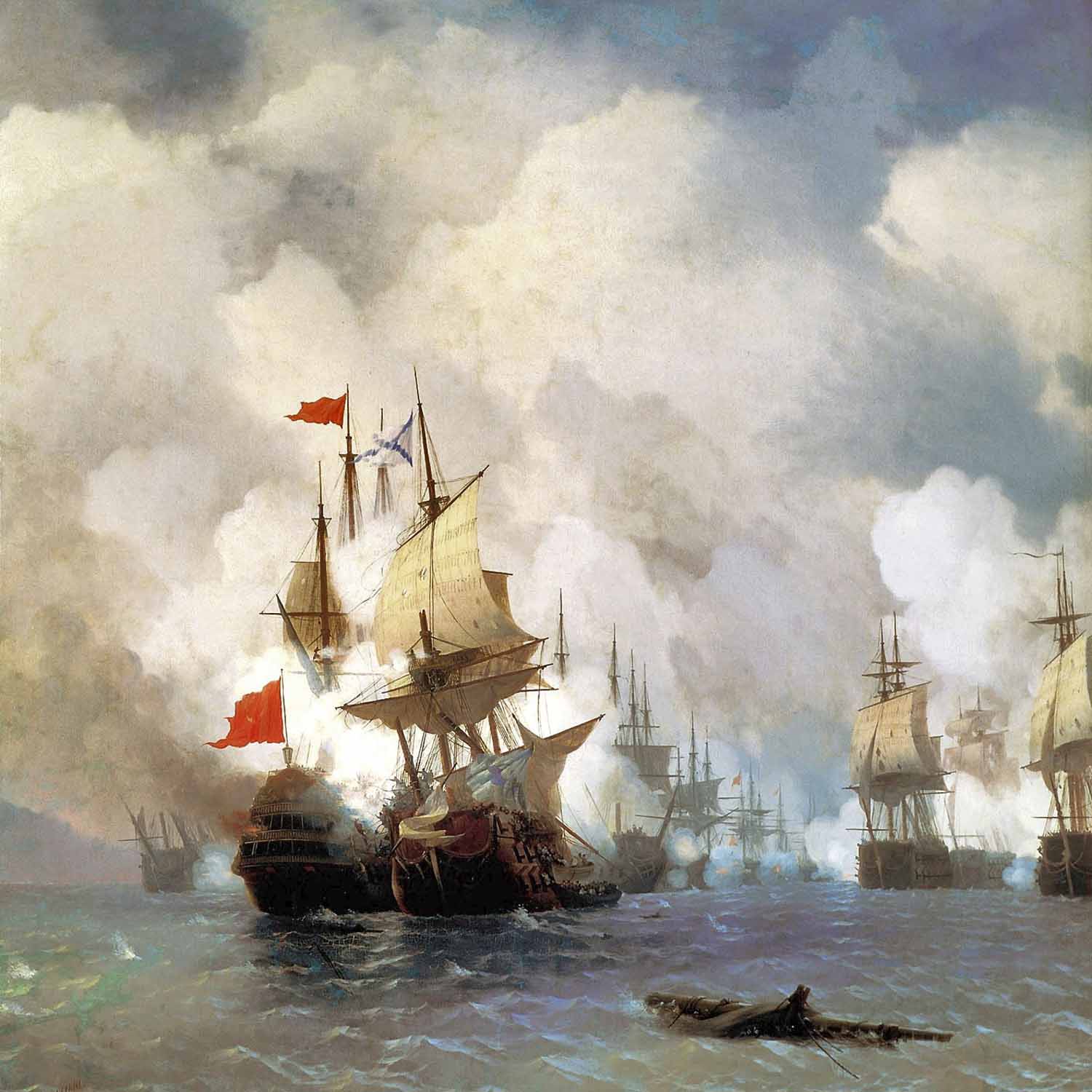
Battle of Chios on 24 June, 1770 (Fragment) | 1848
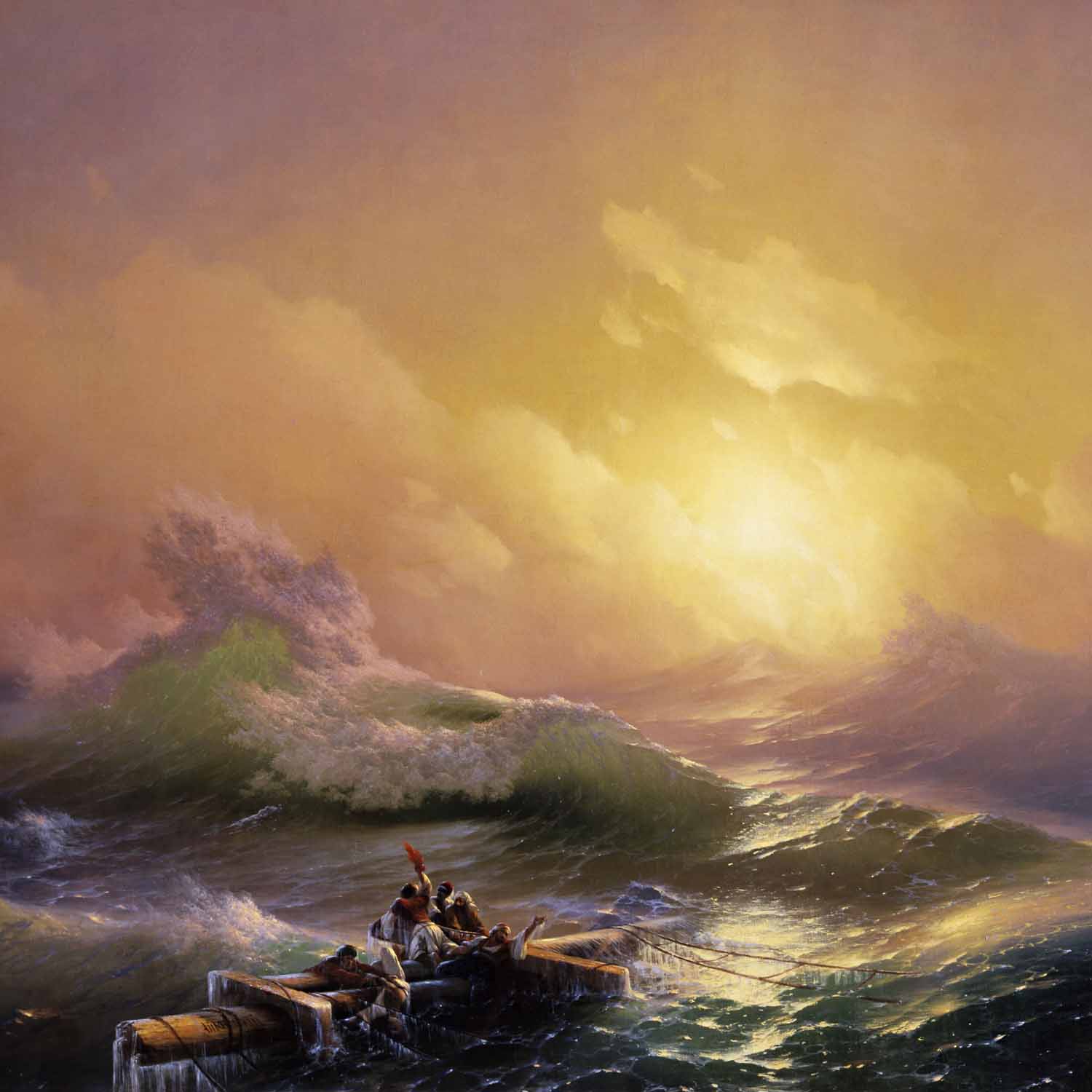
The Ninth Wave | 1850